


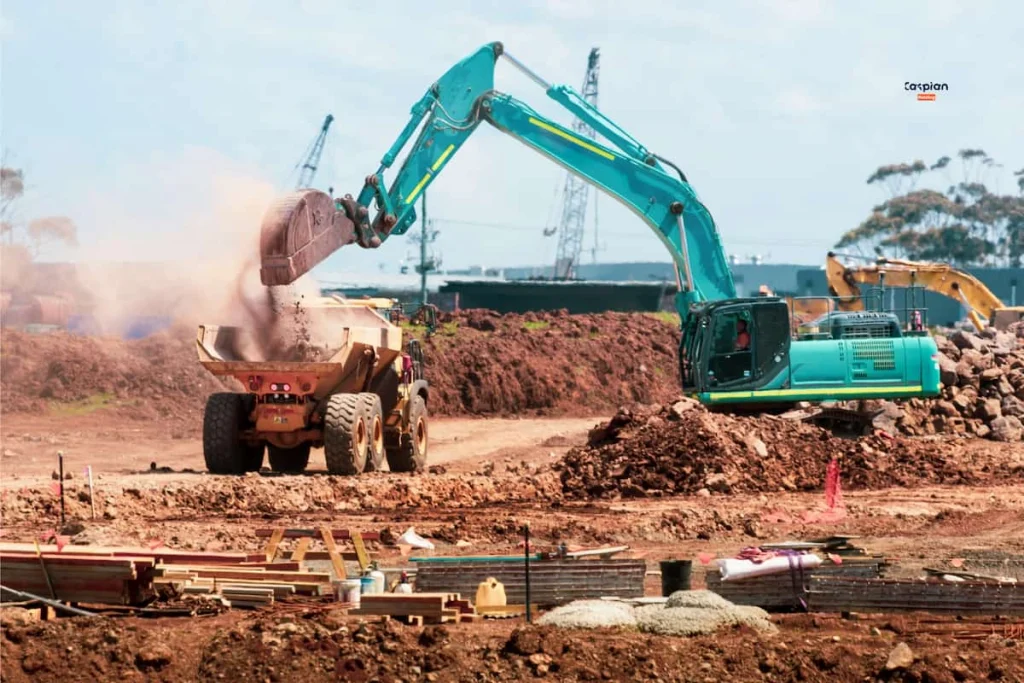
Construction work can be noisy, but living next to a construction site is a different matter. Drilling outside your bedroom, concrete breaking during a work call, or machinery running for hours can make an otherwise normal day difficult.
Not all construction noise comes from the same source. Sometimes the equipment is responsible. In other cases, the problem comes from where machinery is placed, when work is carried out, or the way sound and vibration travel from the site.
If you’re wondering how to deal with construction site noise, first find out what is happening and whether anything can be changed at the site. You can then decide whether to speak with the contractor, report the problem, or focus on keeping the noise out of your home.
What to Do When Construction Noise Is Affecting You
Before spending money on soundproofing or making a formal complaint, take some time to understand the disturbance. A few days of good records can be more useful than simply saying that the construction site is loud.
Check the Permitted Hours
Construction hours are generally governed by local rules, so don’t assume that a schedule used in one area applies somewhere else. Health Canada notes that municipalities commonly have noise bylaws covering construction, while provinces and territories may have additional requirements.
Check for restrictions on early-morning, evening, weekend or holiday work. There may also be permits or exemptions allowing certain activities outside the usual hours.
Keep a Noise Record
Write down the date, start and finish time, type of work and whether the noise is continuous or comes in shorter bursts. Try to be specific. “Loud construction all morning” doesn’t give anyone much to work with. “Concrete breaking from 7:40 to 9:10 AM” is much easier for a site manager or local authority to investigate. Short recordings can show what the disturbance sounds like, but they shouldn’t be treated as proof of an exact legal noise level. Keep copies of emails or messages exchanged with the contractor too.
Report Excessive or Prohibited Construction Noise
If speaking with the construction company doesn’t resolve the problem, you may need to make a construction noise complaint to the local authority that handles noise issues in your area. Include the site address, when the noise occurs, what appears to be causing it and how long it lasts.
A complaint is not necessarily “legal action.” In many cases, you’re asking the relevant authority to determine whether the site is complying with the applicable requirements.

Construction Noise Laws and Permitted Hours
Construction noise laws and regulations differ from one place to another, and project permits can make things less straightforward. Check what actually applies to the site rather than relying on a general rule found online.
Regulations Can Set Working Hours
Local rules may restrict construction during certain hours or on particular days. The restrictions can also depend on the work being carried out. Ordinary building work near homes, for example, may be treated differently from road construction or emergency repairs.
Permits Can Change Normal Hours
A contractor may have permission to carry out certain work outside the normal schedule. This can happen where work cannot reasonably be completed during the day or where a project has particular safety or operational requirements.
The permission may also come with conditions about how the work is performed, so checking the actual approval is more useful than making assumptions.
Permitted Hours Don’t Mean Unlimited Noise
Being allowed to work at a particular time doesn’t mean that the contractor has no reason to control the noise. A generator or compressor might be moved farther from neighbouring properties, a barrier could interrupt the path of sound, or the construction method itself could be changed.
Check Rules for the Specific Site
For larger projects, information may be available through the local authority, planning documents or the construction company. Look for approved working hours, noise and vibration controls, complaint contacts and any special conditions attached to the project.
What Construction Companies Can Do to Reduce Construction Noise
Construction noise control is generally more effective when the noise is addressed before it travels beyond the site. That means looking at the construction method, machinery, site layout and equipment condition.
Plan High-Noise Work
Demolition, piling and concrete breaking can be particularly disruptive early in the morning or when nearby homes, schools, offices or hospitals are occupied.
When a project has to operate for long hours, quieter activities can sometimes be scheduled for more sensitive periods while the loudest work is kept to less disruptive hours. Letting nearby residents know when particularly noisy work is expected also gives them a chance to plan around it.
Use Quieter Methods and Equipment
Sometimes the best way to reduce construction noise is to change the work itself rather than trying to contain a noisy machine.
HSE gives examples such as using bursting or crushing instead of pneumatic drilling, and boring instead of pile driving. PCL used a specialised wire saw instead of jackhammers at Stollery Children’s Hospital because the jackhammers were considered too disruptive for the live hospital environment.
The same methods won’t suit every project, but changing the process can sometimes have a greater effect than trying to quieten the equipment afterwards.
Position Equipment Carefully
The location of a generator, compressor or other stationary machine can affect how much noise reaches neighbouring properties. Increasing the distance between the source and nearby people can help, as can placing a barrier between the source and the affected area.
Acoustic Barriers
A properly positioned acoustic barrier can block the direct path between a noise source and nearby properties. Its size, position and construction all affect how well it works, and gaps can reduce its effectiveness.
Maintain Equipment
Worn or loose components can add unnecessary noise. HSE notes that loose and worn parts can vibrate and create additional noise, while silencers, mufflers and covers also need to be kept in good condition.
Monitor and Adjust
Noise monitoring is useful when it leads to a change in how the work is being done. If one activity keeps causing problems, the contractor can review the equipment, location, timing or method and see whether a different approach works better.

How to Reduce Construction Noise Inside Your Home
You can’t always change what happens on the construction site. When the source itself can’t be made quiet enough, look at the route the sound takes into your home. The measures that help most will depend on whether you’re dealing mainly with airborne noise or vibration.
Find Where Noise Enters
Start with windows and doors facing the construction site. Check the seals and look for obvious gaps around window frames. Suitable weatherstripping or acoustic sealant can help with air gaps where appropriate. This is worth checking before spending money on more extensive soundproofing. A gap around a window can reduce the benefit of an otherwise effective barrier.
Temporary Window Soundproofing
If construction is expected to continue for months, secondary glazing may be worth considering. Government guidance on construction-noise mitigation identifies it as a way of improving noise insulation. Keeping windows closed can also improve their performance, although that creates a problem in warm weather or rooms that need ventilation. Alternative ventilation may be needed during the loudest periods.
Plan Around the Noisiest Work
Your noise record may reveal that the worst disruption happens at roughly the same time each day. If heavy drilling usually takes place between 8 and 10 AM, you might be able to schedule an important meeting elsewhere or ask the site manager when that work is planned.
Vibration
Some construction activities produce vibration as well as airborne noise. Piling, heavy demolition and excavation can transmit vibration through the ground and into nearby buildings.
Not every rattling sound means that ground vibration is the cause; airborne sound can also make windows and fittings rattle. If you experience significant vibration, tell the contractor what you are feeling and when it occurs. If you notice new cracks or other possible signs of property damage, document them and seek advice from an appropriate building professional or authority.
Frequently Asked Questions
How Do I Deal With Construction Site Noise?
Check the permitted hours, keep a record of the disturbance and speak with the site manager. If the work appears to breach local requirements, contact the authority responsible for noise complaints in your area.
Can I Complain About Construction Noise?
Yes. The procedure depends on where you live. Give the relevant authority specific information about the site, dates, times and type of noise rather than making a general complaint.
Do Noise-Canceling Headphones Block Construction Noise?
They can make continuous background noise easier to tolerate, but impact sounds such as drilling and hammering are harder to block completely.
Can Construction Noise Damage Your Hearing?
Very loud or prolonged exposure can damage hearing. People working close to construction equipment may need appropriate hearing protection, although HSE recommends controlling noise at the source rather than relying on hearing protection alone.
Final Thoughts
Construction noise is sometimes unavoidable, but there are often practical ways to reduce its impact. Find out what is causing the noise, when it happens and whether the site can change the method, equipment, location or schedule. If the problem is inside your home, look for the weakest point first rather than trying to block every sound at once.