


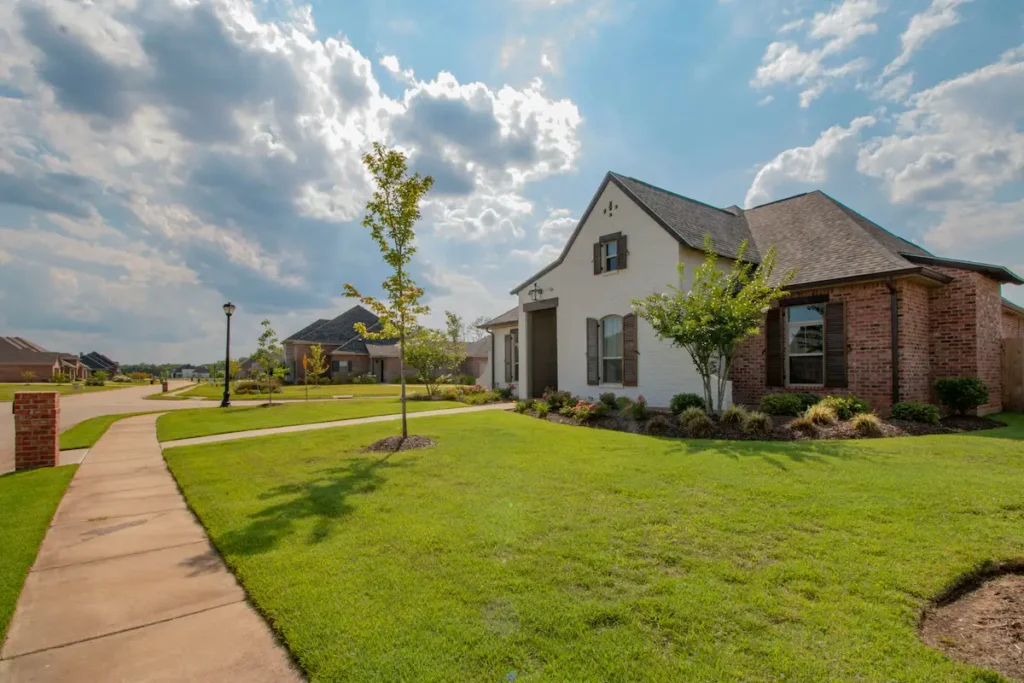
Picture two warehouses of the same size on the same street. One is leased to a creditworthy tenant for another twelve years. The other has a short lease left and a tenant that may not renew. They can sell for very different prices even though the buildings are nearly identical. That gap is the central idea of commercial real estate (CRE): you are buying a stream of rent and the risks attached to it, not just concrete and steel.
This guide follows the order most people need. It covers what qualifies as CRE, who is involved and how the money moves, the main property types, and how buildings are valued. Then it turns to leases, financing, returns, ways to invest, deal evaluation, risk, and where the market stands in late 2026.
What Is Commercial Real Estate?
Commercial real estate is property used for business purposes or bought to produce income. That includes office buildings, retail centers, industrial facilities, hotels, and apartment complexes of five or more units. What separates it from residential property is how it is valued. A house is priced mostly by what similar houses sold for. A commercial property is priced mainly by the income it is expected to generate.
The boundaries are looser than they sound. In the U.S., lenders generally treat one-to-four-unit housing as residential and five units or more as commercial, which is why a 60-unit apartment complex gets commercial underwriting even though people live there. Zoning codes, tax classifications, and lender definitions don’t always agree. A practical test: if the price is justified by a rent roll and an operating statement, you are looking at a commercial asset.
Take a small building with a pharmacy, a dental office, and two vacant suites. A dentist who buys it to occupy one suite is an owner-user. An investor who buys it for the rent from all four suites is a landlord. The building is the same, but the way each buyer evaluates it differs.
How the Commercial Real Estate Market Works
Most transactions involve more parties than a home sale, each with a distinct job:
| Group | Who | What they do |
|---|---|---|
| Ownership | Owners, investors, developers, asset managers | Provide capital, set strategy, build or reposition |
| Occupancy | Tenants, property managers | Pay rent; run day-to-day operations |
| Transaction | Brokers, attorneys, appraisers | Market and negotiate; draft contracts; estimate value |
| Capital | Lenders | Provide debt |
| Support | Accountants, engineers, contractors | Tax, inspection, construction |
Money moves through a property in a fixed sequence. Here is an illustrative building (hypothetical numbers, not a real property): a 50,000-square-foot multi-tenant industrial building that collects $900,000 a year in rent after vacancy and spends $300,000 on operating costs. The remainder, $600,000, is net operating income. Suppose the buyer paid $10 million with a $6 million interest-only loan at 6.5%, costing $390,000 a year. That leaves $210,000 for the equity investors, who put in $4 million. Eventually the owner sells or refinances, and the sale price depends on what the market will pay for that $600,000 of income.
Rent, expenses, NOI, debt payments, investor cash flow, and sale or refinance: nearly every concept in this guide describes one link in that chain.
Types of Commercial Property
Office. Buildings are ranked Class A, B, or C based on age, quality, location, and amenities. Leases are long, but landlords often pay for tenant improvements (TI) and grant free rent, so re-leasing space is expensive. The market now splits by quality. CBRE reported that U.S. office vacancy fell 30 basis points to 18.3% in Q2 2026, the biggest quarterly decline since 2015, while prime space vacancy dropped to 12.3%. Newer, amenity-rich buildings and older commodity buildings are effectively different markets.
Retail. This covers grocery-anchored centers, neighborhood strips, malls, and restaurants. The anchor tenant matters because it draws the traffic that smaller tenants depend on. Leases often include co-tenancy clauses, which let a tenant reduce rent or leave if an anchor goes dark. Tenant mix and sales performance matter as much as location.
Industrial. This includes big-box distribution centers, smaller “shallow-bay” warehouses, manufacturing, and flex space. Demand comes from logistics, e-commerce, and reshoring. CBRE put U.S. industrial vacancy at 6.5% in Q2 2026, the first quarterly decline since Q2 2022, as leasing improved and construction slowed.
Multifamily. Apartments are residential by use but commercial by scale and financing. The sector is large: MBA data show multifamily mortgage debt reached $2.3 trillion by the end of Q2 2026.
Hospitality. Hotels behave more like operating businesses than landlord investments. Revenue resets nightly, and performance is tracked through occupancy, average daily rate, and RevPAR (revenue per available room: occupancy multiplied by average daily rate). Brand, management quality, and capital reinvestment drive results.
Specialty. Self-storage, medical office, data centers, senior and student housing, cold storage, manufactured housing, mixed-use, and development land all fall here. Specialty doesn’t mean safe. CBRE reported that U.S. lab and R&D vacancy hit a record 23.8% with asking rents down 8.1% year over year, while medical outpatient building investment rose 24% year over year to $2.7 billion in Q2 2026. Beginners usually do better learning a mainstream type before moving here.
Commercial vs. Residential Real Estate
This table helps you see the difference between residential and commercial real estate:
| Residential | Commercial | |
|---|---|---|
| Lender focus | Borrower’s income and credit | The property’s cash flow plus borrower strength |
| Lease term | Usually 6–12 months | Often 3–10+ years |
| Operating costs | Owner typically pays most | Often passed to tenants |
| Tenant | An individual | A business with its own credit and needs |
| Management | Often self-managed | Usually professional |
| Liquidity | Deeper buyer pool | Thinner, slower, higher transaction costs |
Commercial is not automatically more profitable. Outcomes depend on purchase price, tenant quality, leverage, and execution. A poorly bought office building can lose money faster than a well-bought rental house.
How Commercial Property Is Valued
Commercial properties are valued in different ways:
Net operating income (NOI)
NOI = Property revenue − Operating expenses. Operating expenses include property taxes, insurance, utilities, maintenance, management, and payroll. They exclude mortgage payments, depreciation, and major capital expenditures.
Underwriters usually normalize NOI rather than accept the seller’s number. If the owner self-manages, they add a market-rate management fee. If property taxes may be reassessed after a sale, as they can in many jurisdictions, they model the higher bill. A seller’s NOI is a claim until it is rebuilt from documents.
Capitalization rate
Cap rate = NOI ÷ Property value, which means Value = NOI ÷ Cap rate.
The example building earns $600,000. At a 6% cap rate it is worth $10 million. If market cap rates move to 7%, the same income supports only about $8.57 million, a 14.3% drop with no change to the building. That sensitivity is why interest-rate and investor-sentiment shifts move commercial prices.
Three versions appear in underwriting: the going-in cap rate (NOI at purchase divided by price), the stabilized cap rate (after vacancies are leased up), and the exit cap rate (assumed at sale, usually set higher than going-in to be conservative). Cap rate is an unlevered snapshot. It ignores financing, growth, lease rollover, and capital needs, so it cannot tell you alone whether a deal is good.
The other metrics, using the same building
| Metric | Formula | Example | Useful for |
|---|---|---|---|
| Cash-on-cash return | Annual cash flow ÷ equity | $210,000 ÷ $4M = 5.25% | Year-one yield on invested cash |
| LTV (loan-to-value) | Loan ÷ value | $6M ÷ $10M = 60% | Leverage level |
| DSCR | NOI ÷ annual debt service | $600K ÷ $390K ≈ 1.54 | Cushion before payments strain |
| Debt yield | NOI ÷ loan | $600K ÷ $6M = 10% | Lender risk, independent of rate |
| IRR | Annualized return incl. timing of cash flows | Needs a full projection | Comparing deals with different hold periods |
| Equity multiple | Total cash returned ÷ equity invested | Needs a full projection | Total profit, ignoring timing |
| Price per sq ft | Price ÷ area | $10M ÷ 50,000 = $200 | Quick comparison to similar sales |
Occupancy, vacancy, and rent growth supply the assumptions behind all of these. Rent growth in particular is where most spreadsheet optimism hides.
Why similar buildings sell for different prices
Value rests on three layers. The first is income durability: tenant credit, remaining lease term, and whether in-place rents sit above or below market. The second is the asset and its surroundings: local supply pipeline, replacement cost, zoning, physical condition, and development potential. The third is capital markets: interest rates, cap rates on recent comparable sales, and lender appetite. Two visually identical buildings diverge when any layer differs, and the income layer usually differs most.
Commercial Leases
The lease is the real asset. The physical building only matters because tenants will pay to occupy it.
| Structure | Who pays operating costs | Common use |
|---|---|---|
| Gross | Landlord covers most costs within one rent | Office, small multi-tenant |
| Modified gross | Costs shared, often above a base year | Office |
| Net / triple-net (NNN) | Tenant pays taxes, insurance, and maintenance on top of base rent | Single-tenant retail and industrial |
Retail leases may add percentage rent, a share of tenant sales above a threshold. Beyond structure, these terms shape value:
- Escalations. Scheduled rent increases, either fixed steps or inflation-linked.
- Term and renewal options. Longer terms stabilize income, but a tenant’s option to renew at a fixed rent can cap upside.
- TI allowances and free rent. Concessions that reduce real income. A $30-per-foot lease with twelve months free on a ten-year term averages $27 over the term, before counting the TI the landlord paid. Underwriters compare this effective rent rather than the quoted face rent.
- CAM (common area maintenance). Shared costs billed to tenants, reconciled annually. Caps and exclusions in the lease determine what the landlord can actually recover.
Net leases shift cost risk to tenants but concentrate income risk on one tenant’s creditworthiness. A 15-year NNN lease to a strong national tenant and a month-to-month lease to a local startup can sit in identical buildings and be priced like different asset classes.
How Commercial Real Estate Is Financed
Sources. Banks and credit unions offer relationship lending, often with recourse to the borrower. Life insurance companies lend conservatively on high-quality assets. Fannie Mae and Freddie Mac back multifamily loans. CMBS loans are pooled into securities; they are typically non-recourse but less flexible if conditions change. SBA 7(a) and 504 programs support owner-occupied properties, where the business generally has to occupy most of the building. Bridge lenders provide short-term money for properties in transition, and construction loans fund development. Mezzanine debt and preferred equity sit between senior debt and common equity. Private debt funds and seller financing fill remaining gaps.
Structure. Commercial loans commonly run 5–10 years but amortize over 25–30, which leaves a balloon payment due at maturity that must be paid off or refinanced. Other terms that change outcomes:
- Recourse vs. non-recourse: whether the lender can pursue the borrower personally beyond the property.
- Interest-only periods: lower early payments, with no principal reduction.
- Prepayment penalties: yield maintenance, defeasance, or step-down fees that make early payoff costly.
- Sizing: lenders test the LTV, DSCR, and debt yield metrics from the valuation section, and the tightest test sets the loan amount.
Down payments commonly run 25–40% of the price, though they vary by property, borrower, and lender. Treat any general figure as context, not a quote or advice.
How Commercial Real Estate Makes Money
Returns come from several sources that often overlap:
Operating cash flow. The $210,000 in the example, after expenses and debt.
NOI growth. This works as a multiplier. At a 6% cap rate, an extra $50,000 of NOI adds roughly $833,000 of value, so lifting rents or trimming costs matters far more than the raw dollars suggest.
Principal paydown. Tenants’ rent gradually repays the loan, building equity.
Appreciation. Value changes from NOI growth and market pricing. The second part is outside the owner’s control.
Leverage. Debt magnifies results in both directions. In the example, a move from a 6% to a 7% cap rate cuts value 14.3%, from $10 million to about $8.57 million. After the $6 million loan, equity falls from $4 million to about $2.57 million, a drop of roughly 36%.
Value-add, repositioning, and development. Value-add buys under-managed property and improves it, for example by renovating or leasing vacant space. Repositioning changes how the property is used. Development builds from scratch and carries the most risk.
Tax treatment. Depreciation can reduce taxable income, and qualifying sales may allow deferral through a Section 1031 exchange. Rules are technical and change, so consult a CPA.
Nothing here is guaranteed. Income is only as reliable as the tenants paying it.
Ways to Invest in Commercial Real Estate
The first decision is active versus passive. Active investors source, finance, and operate property. Passive investors provide capital and rely on someone else’s execution. Passive does not mean risk-free; it means your outcome depends on a sponsor’s skill, a lender’s terms, and a market you don’t control.
| Path | How it works | Main trade-offs |
|---|---|---|
| Direct ownership | You buy and operate (or hire a manager) | Control and tax flexibility; concentrated risk, large capital, time |
| Syndication | A general partner (GP) runs the deal; limited partners (LPs) fund it | Access to larger assets; limited control, fees, illiquid |
| Public REITs | Shares in companies that own income property | Liquid, diversified; prices move with the stock market |
| Non-traded REITs and private funds | Pooled capital across multiple assets | Diversification; redemption limits, fees, less transparency |
| Crowdfunding | Online platforms pool smaller investments | Low minimums; illiquidity, platform and sponsor risk |
When evaluating a sponsor, look at their track record through a full cycle, how they’re paid (acquisition, asset management, and disposition fees), the return waterfall (preferred return, profit splits), and what happens if a capital call arrives.
How to Evaluate a Commercial Property
A rent roll lists every tenant, suite, square footage, rent, and lease dates. A T-12 is the trailing 12-month operating statement. With those in hand, work through the deal in this order:
- Set criteria. Target return, hold period, equity available, and risk tolerance.
- Screen the market and submarket. Job growth, new supply, and whether rents justify construction costs.
- Read the rent roll. Look for clustered lease expirations, below-market rents, and tenants behind on payments.
- Abstract the leases. Confirm the rent roll matches the leases, then check termination rights, expense caps, exclusive-use clauses, and co-tenancy provisions.
- Test the T-12. Compare it with tax returns and bank deposits, and see whether repairs and reserves are realistic.
- Rebuild NOI. Normalize expenses as described earlier.
- Compare to the market. Pull sales comps and lease comps to see whether in-place rents are above or below market.
- Model scenarios. Base and downside cases with higher vacancy, an exit cap rate above the going-in rate, and higher borrowing costs.
- Inspect the physical asset. Roof, HVAC, parking, structure, and accessibility compliance, with a capital expenditure budget.
- Clear legal and environmental questions. Title, survey, zoning, a Phase I environmental assessment, insurance quotes, property tax records, service contracts, and tenant estoppels.
- Negotiate and close. A letter of intent leads to a purchase agreement, a diligence period, and closing. Findings often justify renegotiating price.
A listing is a sales document, and diligence is the audit. It exists to find what the marketing package leaves out.
Risks of Commercial Real Estate
Income risks. Vacancy, tenant default, and lease rollover can cut NOI quickly, especially in properties with few tenants or clustered expirations. Managing them means laddering expirations, diversifying tenants, and underwriting tenant credit.
Financing risks. Refinancing risk arises when a loan matures before conditions improve. Overleveraging turns a moderate decline in value into a wipeout of equity, as the leverage example showed. Conservative LTV, longer fixed-rate terms, and cash reserves are the standard defenses.
Asset risks. Surprise capital expenditures, environmental contamination, and construction delays or cost overruns can erode returns. Thorough diligence, contingency budgets, and fixed-price contracts help.
Market risks. Economic cycles, concentration in one market or property type, rising operating costs, and illiquidity all matter. Selling a commercial property takes months, and a forced sale can mean a discount. Diversification and matching hold periods to business plans reduce exposure.
Sophisticated investors don’t try to eliminate risk. They size it, price it, and avoid positions where one bad assumption can end the deal.
Commercial Real Estate Market Conditions in 2026
Property-level data appeared above, so this section covers pricing and debt, the forces behind valuation and refinancing risk.
Pricing. CBRE’s H1 2026 survey found that the all-property average cap rate was essentially flat even though the 10-year Treasury yield peaked at 4.67%. The all-property rate sat near 6.6%, according to a summary of the survey. Beneath the average, compression was greatest in neighborhood retail, followed by hotels and industrial. About 60% of respondents expect no change over the next six months, but more now expect increases than before, especially for Class C assets. Quality is being priced differently from commodity space.
Debt. MBA data show commercial and multifamily mortgage debt outstanding reached $5.1 trillion at the end of Q2 2026. About $875 billion, or 17% of $5.0 trillion in outstanding commercial mortgages, matures in 2026, with $652 billion more due in 2027. Exposure varies by sector: 13% of multifamily-backed mortgages and 17% of office-backed mortgages mature in 2026.
Many of those loans were written under different rate conditions, so some owners will refinance with more equity, sell, or negotiate extensions. That creates both distress and opportunity, depending on the asset. These are national figures, and your market and property type will differ. Verify current numbers at CBRE, MBA, and FRED before relying on them.
Frequently Asked Questions
Is commercial real estate a good investment?
It can be, depending on price, leverage, tenants, and execution. It differs from stocks in being illiquid, capital-intensive, and heavily influenced by local conditions. Whether it fits depends on your goals, time horizon, and tolerance for risk, so this isn’t individual advice.
How much money do you need to invest?
Direct purchases usually need substantial equity plus closing costs and reserves, often several hundred thousand dollars or more even for small properties. REITs and some private funds accept far smaller amounts.
What is a good cap rate?
There’s no universal answer. A good rate compensates for risk relative to financing costs and alternatives. Compare it against recent sales of similar properties and the loan’s interest rate.
Do I need a license to invest?
Generally not to buy property for yourself. Brokering transactions, however, requires a real estate license in most states, and some private offerings are limited to accredited investors.
Should a small business own or lease its space?
Owning builds equity and gives cost certainty, and SBA-backed loans can reduce the down payment. Leasing preserves cash and flexibility. The choice usually comes down to whether capital is better spent growing the business.
How long does a purchase take?
Commonly one to three months from signed contract to closing, driven by the diligence period and loan approval. Complex or heavily financed deals can run longer.
Conclusion
Commercial real estate rewards people who understand income, leases, and debt more than those who simply like buildings. Property type and location set the opportunity, leases and NOI determine value, financing shapes the risk, and diligence protects the downside.
If you want to buy, underwrite ten real listings before making an offer. If you prefer to be passive, learn how to vet a sponsor before committing capital. If you want a career in the field, pick a market and start talking to the people working in it.